
Building mass height
vs. architectural height
SKYDB uses the field building mass height as its main height value and to rank the 1000 tallest skyscrapers in the world.
How SKYDB measures building height
Since Petronas Towers were completed in 1998, a long-running debate failed to settle whether ornamental features such as spires should count towards a building's height. In most official publications until then, architectural spires on the rooftop were included in height rankings and were often perceived by the public as cheating elements.
The building mass height resolves this by synthesizing the best features of the existing measurement systems. It counts ornamental features only when their form flows directly from the shape of the building's enclosure, which produces rankings that match what people actually see.
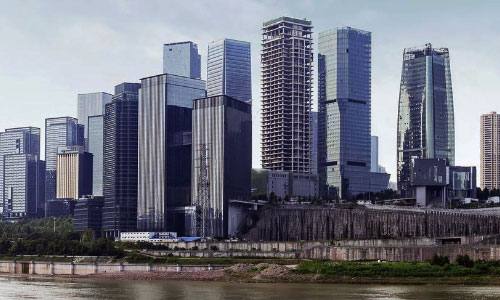
In skyscraper height rankings, architectural height can include a narrow spire far above the occupied part of a tower. Roof height stops at the enclosure, even when a spire continues the shape of a tapered roof.
What counts, and what does not
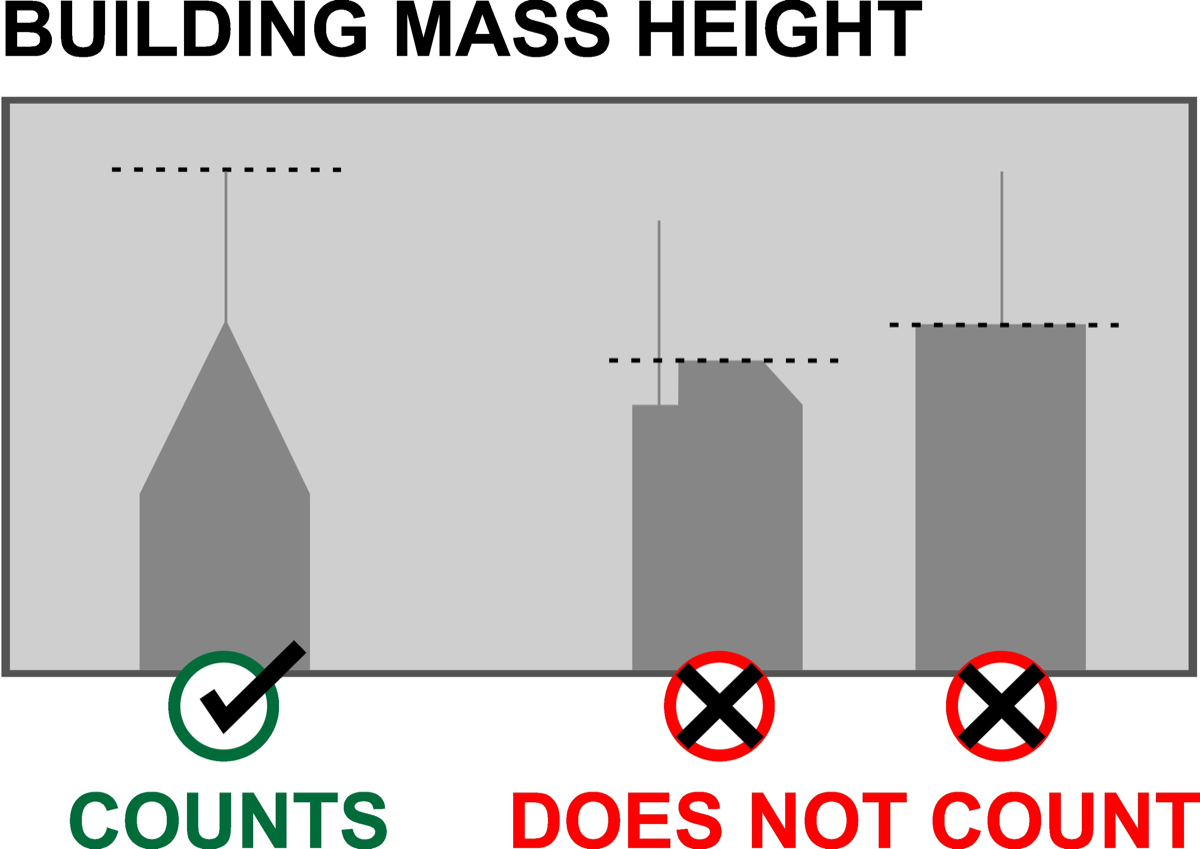
The building mass height is the vertical distance from a building's base to the highest architectural element whose form flows smoothly from the building's enclosed or occupiable volume.
Parapets and screen walls are always included, because they contribute to the building's apparent volume. Spires, finials, chimneys and sculptures rising from a flat roof are not counted, but they are counted when they rise from the upper point of a pyramid, ziggurat, dome or slope at the top of a roof. Thin elements rising to the side of a pointed or tapering roof, which do not rise directly from the high point, are not counted.
By definition the building mass height can never be lower than a building's roof height, nor higher than its architectural height. It may equal either one, or fall between them.
What changed
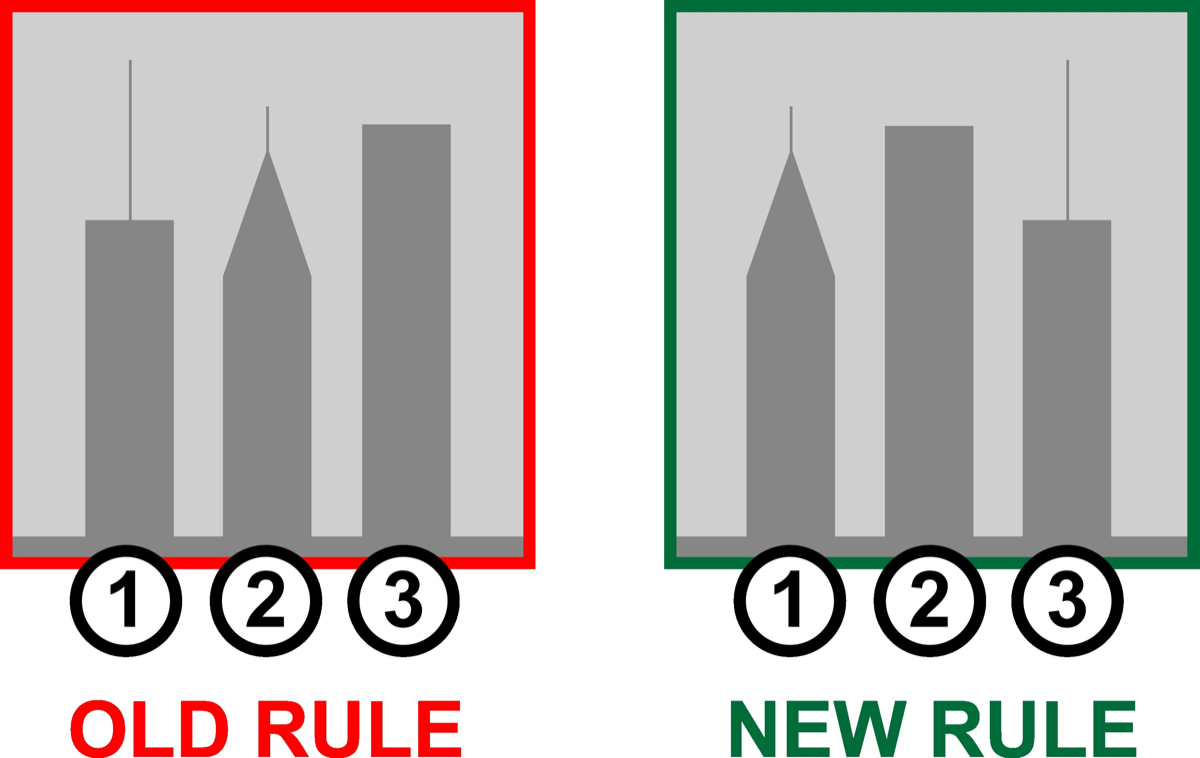
Applying the formula to every skyscraper in the world re-ordered the ranking substantially. Well-known towers lost a large part of their published height:
| Building | Architectural height | Building mass height |
|---|---|---|
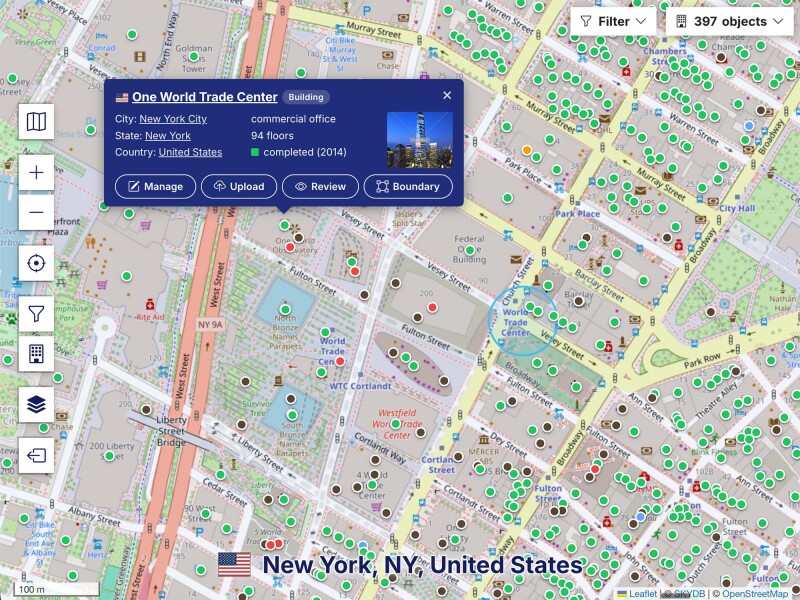
| One World Trade Center in New York City, NY | 541 m | 418.7 m |
| Zifeng Tower in Nanjing | 450 m | 381 m |
| Trump International Hotel & Tower in Chicago, IL | 423.2 m | 366.1 m |
| Shun Hing Square in Shenzhen | 384 m | 325 m |
| New York Times Tower in New York City, NY | 318.8 m | 261 m |
Buildings whose ornamental tops are not enclosed keep their height, among them the Burj Khalifa, Taipei 101, Petronas Towers and Chrysler Building. Their crowns rise from a tapering form and are therefore part of the building mass.
Why SKYDB uses it
The purpose of the building mass height is to enable a height ranking that counts only the features visually integral to the shape of a building, so that buildings of very different architectural designs can be compared consistently and fairly. Building mass height is the field behind the 1000 tallest skyscrapers in the world, which lists completed buildings as well as construction projects that have reached their maximum height.
See also the full record for building mass height in the SKYDB definitions, or browse all building definitions.