
italianate
Architecture based on features of Italian Renaissance villas, with rectangular forms, projecting cornices, and decorative borders.
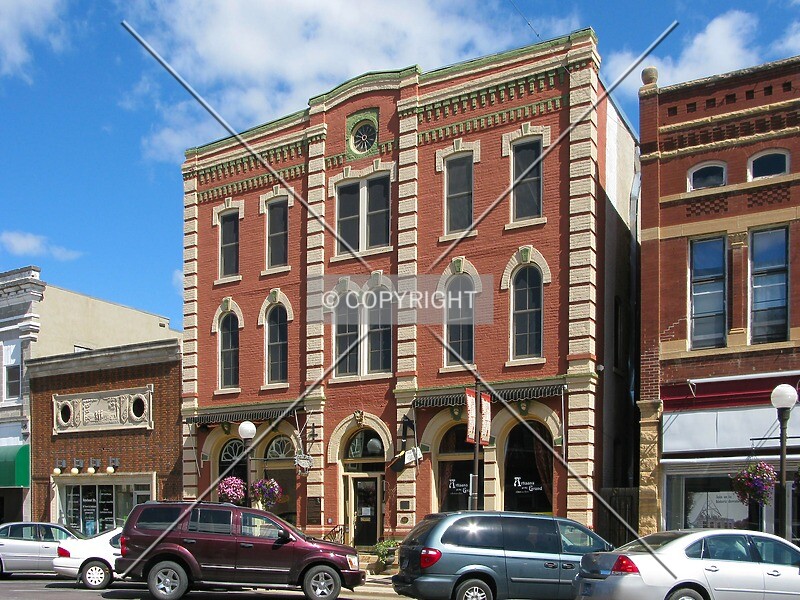
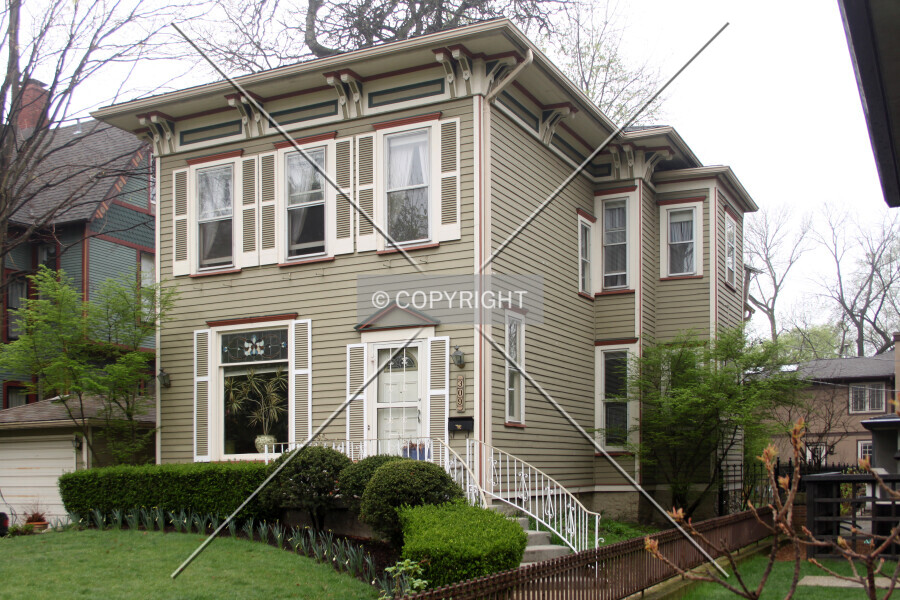
Italianate architecture is a style common in the 19th and early 20th centuries, derived from forms and features of late Renaissance villas, palaces, and public buildings in northern Italy. Common features include pronounced overhanging eaves, shallow hipped or pyramidal roofs with decorative lantern boxes, rectangular towers, glazed doors, and highly regular and pronounced geometric decorations such as corbel bracing, window borders, balustrades, and shallow archways over windows and doors.
Approximate Dates: 1840 to 1900
The shallow roof, pronounced eaves, and regular decorative framing give the building its Italianate treatment. The later use of those features distinguishes it from an original Renaissance building.
italianate Photos
Related definitions
-
beaux-arts
Baroque revival architecture of the late 19th and early 20th centuries with elaborate ornamentation and an emphasis on hierarchies of space. -
chateauesque
A revival of the elaborate, castle-like architecture of French Renaissance chateaus. -
egyptian revival
Architecture of the 19th and early 20th centuries that uses ancient Egyptian forms and ornament. -
mayan revival
An early twentieth-century revival of Maya architectural forms, imitated stonework, script, and ornament. -
moorish revival
A romantic revival of Mudéjar or classical Moorish architecture of Spain and North Africa. -
neo-baroque
A revival of baroque architectural forms and motifs in the 19th and early 20th centuries. -
neo-byzantine
A 19th and 20th century revival of Byzantine architecture, with domes, centralized plans, and Near-Eastern ornament. -
neo-classical
A conservative application of classical Greek and Roman design features, including columns, arches, and pediments. -
neo-gothic
Application of gothic forms to buildings of the 19th and 20th centuries, especially pointed arches, elaborate tracery, buttresses, and sharp spires. -
neo-renaissance
An adaptation of Italian Renaissance features to buildings of the late 19th and early 20th centuries, with restrained classical ornament. -
neo-romanesque
A revival of Romanesque architecture, characterized by heavily rusticated stonework, rounded arches, large forms, and steep roofs. -
neo-traditionalism
Architecture after 1980 that imitates historic ornamental styles literally, sometimes in a more abstract way. -
oriental revival
Traditional East Asian architectural forms applied to modern and postmodern designs. -
postmodern
Architecture after 1970 which plays creatively with ornamentation or massing derived retroactively from historical styles. -
queen anne
A mainly residential style featuring complex shapes with turrets, strong ornamentation, and varied coloring. -
second empire
Architecture belonging to or derived from the dominant Parisian style of the 1870s, with ornate facades and mansard roofs. -
soviet classicism
A highly formal and ornamental neoclassical style associated with Soviet and Eastern European institutional architecture. -
spanish revival
A revival of old Spanish and Moorish styles characterized by flamboyant ornament and bright colors. -
swiss chalet
A vernacular Alpine domestic style using wide gables, overhanging eaves, and exposed wood framing. -
tudor revival
Architecture of the 19th and 20th centuries based on English Tudor domestic styles, usually with half-timbering and steeply pitched roofs.