
definition
strict definition
vertical-lift bridge
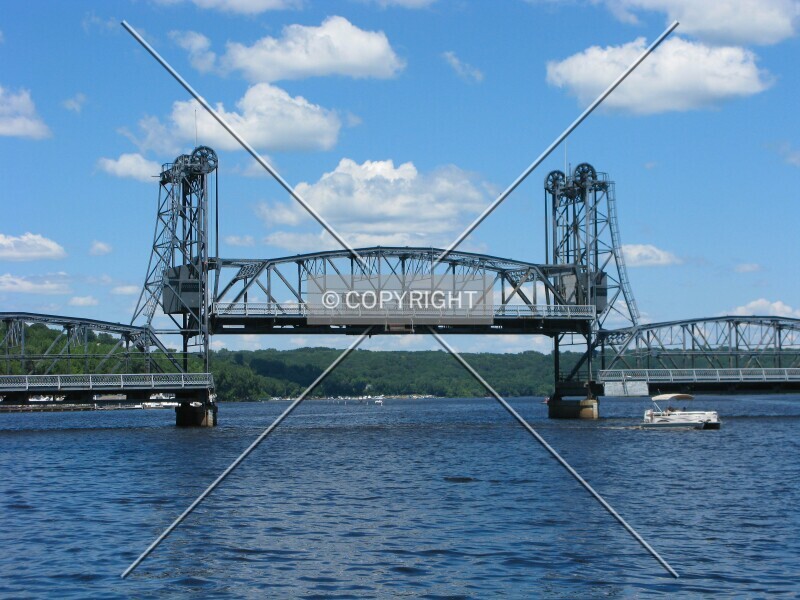
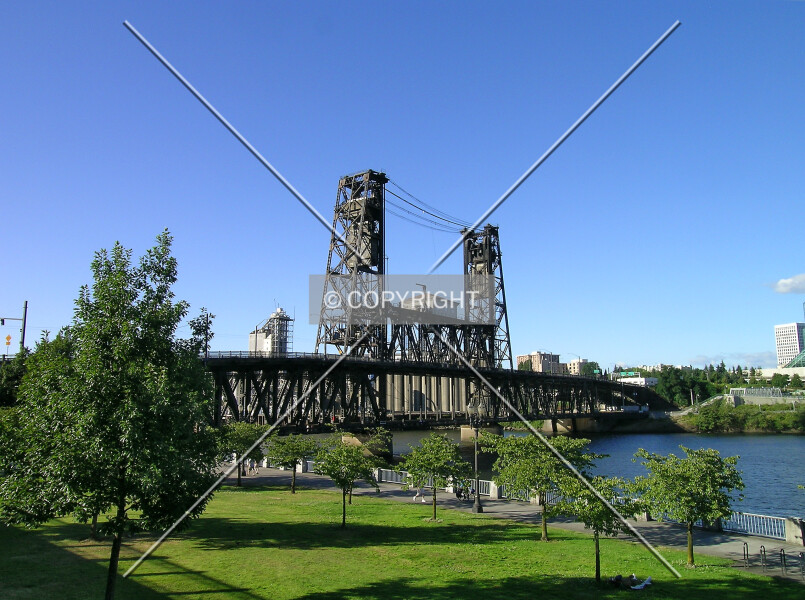
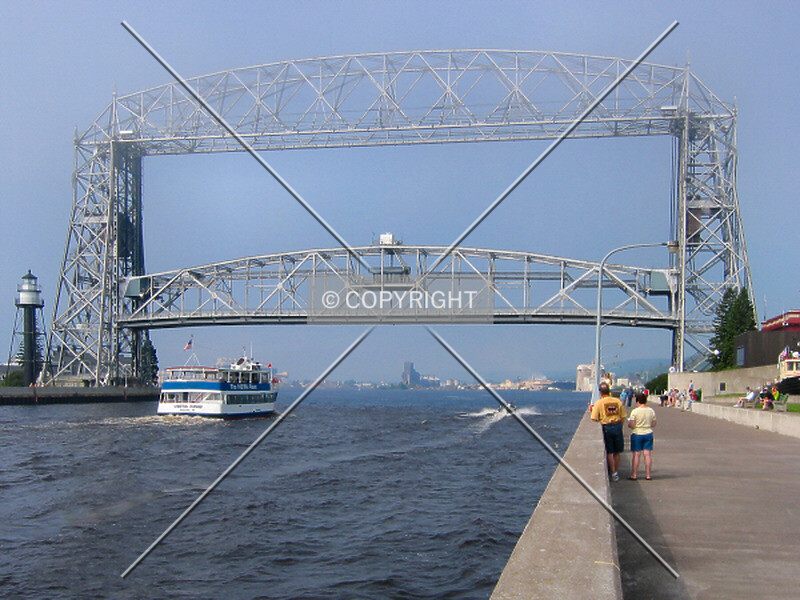
A movable bridge whose level span is raised along towers at its ends, usually by counterweighted cables.
Pictured: Houghton-Hancock Bridge
A vertical lift bridge is a fairly common type of openable bridge, whose deck remains level as it is lifted by mechanisms on two parallel towers at either end. The span is usually lifted by cables with counterweights, but can also rise on hydraulic jacks.
This type is common for railroad bridges because it is generally efficient at supporting heavy loads.
The span remains level while changing elevation. This distinguishes the movement from a hinged leaf that tilts upward; railroad use is common but is not required.
vertical-lift bridge Photos

Related definitions
-
bascule bridge
A movable bridge with one or two leaves that rise on hinges with assistance from counterweights. -
curling bridge
A movable bridge with a flexible or segmented span which opens by curling vertically. -
drawbridge
A hinged bridge lifted at its free end by chains, cables, or ropes, without a counterweight at the hinge. -
folding bridge
A movable bridge with a segmented span that folds horizontally like an accordion to open the crossing. -
retractable bridge
A movable bridge whose deck opens by sliding back from the channel over or under its approach. -
rolling bascule bridge
A movable bridge whose span rises as large gears roll along a shoreline rack, without a fixed hinge. -
submersible bridge
A movable bridge whose span sinks below water to allow boat traffic to move over it. -
swing bridge
A movable bridge with a span that turns horizontally about a fixed pivot at its center or one end. -
table bridge
A movable bridge whose span is pushed upward from below at both ends, usually by hydraulic pillars. -
tilt bridge
A movable bridge with a curved span that forms an arch when rotated at the ends. -
transporter bridge
A bridge which conveys traffic across its span via gondolas suspended from a high track or cables.