
medieval norwegian
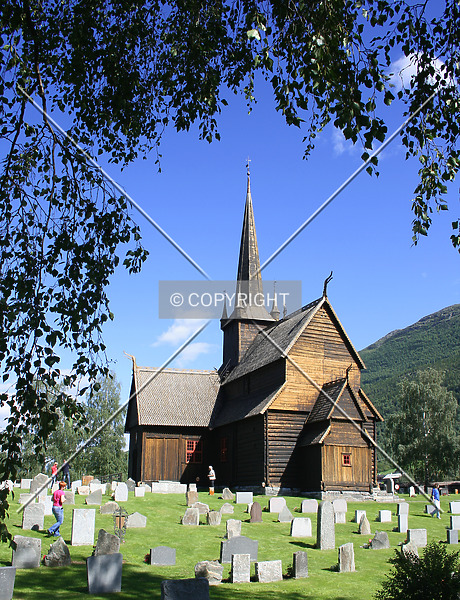
A medieval Norwegian vernacular style with timber framing, steep roofs, layered masses, and carved wooden ornament.
Pictured: Lom stavkirke
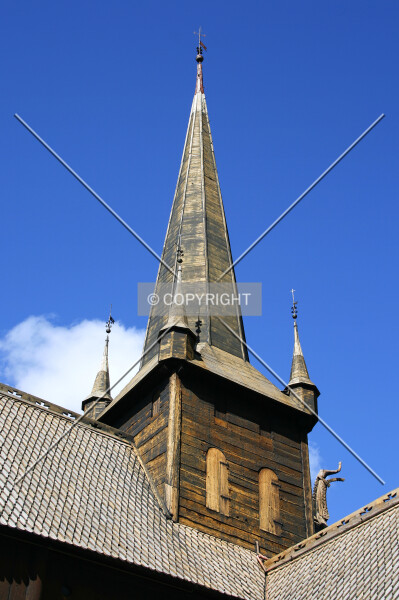
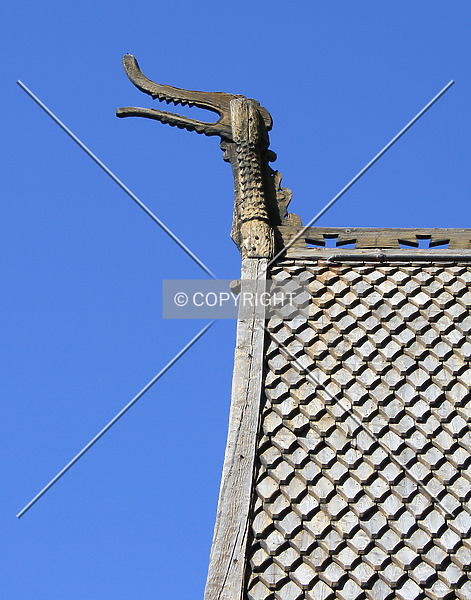
Medieval Norwegian architecture is a vernacular style typified by the stave churches of Norway and surrounding countries. It typically features strong wooden post-and-beam construction with steeply pitched roofs, multiple setbacks, nested building masses, and carved wooden ornament.
Timber posts and beams provide a strongly articulated construction beneath the steep roof forms. Setbacks and nested masses can create several successive roof levels.
The carved timber and layered roof composition distinguish this vernacular from styles defined by massive masonry. Its association with stave churches does not make every wooden church an example of the style.
medieval norwegian Photos
Related definitions
-
baroque
Post-Renaissance architecture with a strong emphasis on the plasticity of classical forms. -
byzantine
Architecture derived from the Byzantine Empire, featuring domes flanked by lower semidomes, with floorplans based on a central square. -
carolingian
Medieval architecture of the late first millennium, influenced by Roman architecture. -
classical chinese
Traditional Chinese architecture with prominent roof eaves and an emphasis on vertical and horizontal hierarchies. -
classical greek
Architecture of ancient Greece, characterized by refined proportions, fluted columns, and triangular pediments. -
classical japanese
Traditional architecture of Japan, featuring wide overhanging roofs and clear skeletal constructions. -
classical mexican
Pre-Columbian architecture from central Mexico, including Teotihuacano, Olmec, Toltec, and Aztec. -
classical roman
Architecture of the Roman Empire, with rationalistic stone constructions influenced by Greek architecture and often using rounded arches. -
egyptian
Architecture of Pharaonic Egypt with monumental stone or mud-brick construction, formal plans, and characteristic tapering forms. -
fachwerk
Vernacular European architecture using exposed timber framework as decoration, with stucco infill. -
gothic
European architecture of the late Middle Ages with light stone frameworks, vertical detailing, and extensive tracery. -
islamic
Architecture of the Middle East typified by multiple minarets, slightly pointed domes, and elaborate geometric or calligraphic decoration. -
mannerist
European architecture between Renaissance and Baroque with an emphasis on creative variation in a classical vocabulary. -
mayan
Architecture of the ancient Maya peoples, best known for large symmetrical stone pyramids and vaulted temples. -
mughal
Architecture of South-Central Asia from the Mughal reign blending Indian and Islamic features, often with domes and profusions of arches. -
renaissance
European Renaissance architecture emphasizing classical symmetry, proportion, and an ordered arrangement of forms. -
rococo
An ornate development of Baroque design, with twisting forms, gilding, organic ornament, and overlapping decorative surfaces. -
romanesque
Architecture of the early second millennium characterized by massive symmetrical constructions with rounded arches and vaults. -
russian
A primarily ecclesiastical style characterized by square or cross-shaped plans, multiple onion domes, bright colors, and elaborate ornamentation.