
definition
strict definition
limestone
A floor made from cut natural limestone, often selected for its varying texture or visible fossil content.
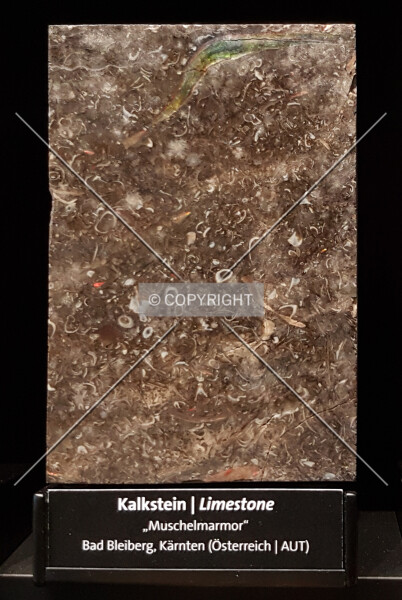
Limestone flooring uses blocks, sheets, pavers, or any other cut of limestone, a common type of stone composed mainly of sedimentary calcium carbonate. It is sometimes valued for its variable textures and its fossil content, which adds a decorative element to an interior space.
Blocks, sheets, and pavers are examples of acceptable stone forms. The unit shape does not change the limestone material.
Visible fossils can contribute to the appearance but are not required in every piece. Marble flooring uses a separate metamorphic stone even where the finished floors look similar.
limestone Photos
Related definitions
-
asphalt
A hardened mixture of crushed rock aggregate and viscous petroleum derivatives used in flooring or paving. -
brick
A floor surface assembled from individual paving or masonry bricks, with or without mortar or grout. -
ceramic tile
A floor surface assembled from clay tiles, including terracotta, porcelain, and quarry tile, glazed or unglazed. -
clay
A continuous floor of fine-grained earthen minerals, either baked as a surface or naturally present beneath a structure. -
concrete
Flooring made of concrete or cement, usually a painted or unimproved structural floorplate. -
glass
Flooring made of glass, either for a smooth surface or to enable transparency. -
granite
A floor made from cut natural granite in tiles, pavers, blocks, or slabs, with polishing optional. -
marble
A floor surface made from blocks, tiles, sheets, pavers, or other pieces of natural marble. -
mosaic
Flooring composed of many small pieces of colored stone in a decorative pattern. -
sandstone
A floor made from cut natural sandstone in blocks, sheets, pavers, or other stone units. -
slate
A floor surface made from slabs, tiles, blocks, sheets, or other pieces of natural slate. -
terrazzo
A poured resin floor containing marble or other stone chips that produce a decorative surface pattern.