
cellular brick
A load-bearing frame composed of largely hollow bricks or clay blocks perforated with several holes.
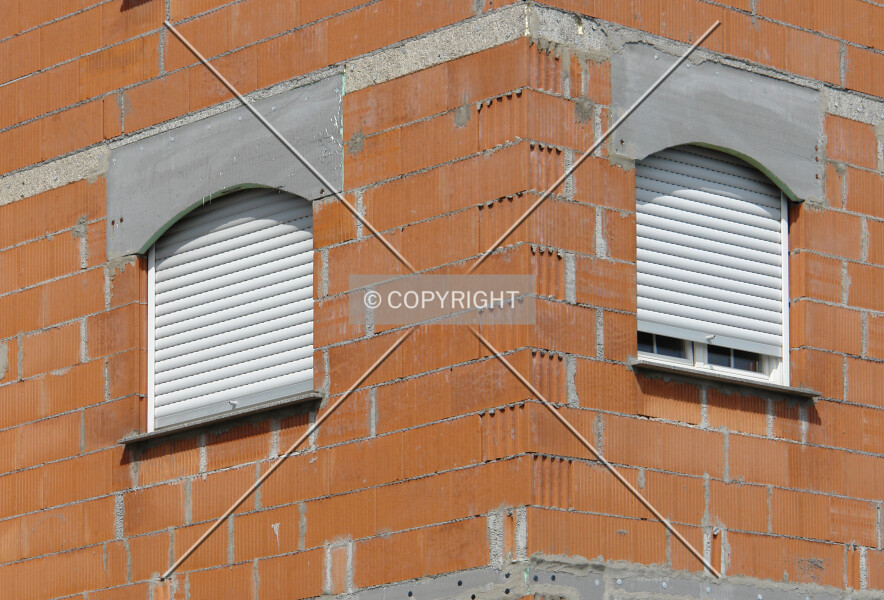
A cellular brick frame is a load-bearing supporting structure for a building or other built object, which is composed of many individual stacked and mortared blocks of baked clay or minerals perforated with several holes so that they form a cellular pattern when viewed through the openings.
Cellular bricks are substantially different from regular bricks; they are generally larger, have a smoother texture, and at least 20% of their volume (and often more) is left hollow by the honeycomb-like set of holes through them. Compared to regular bricks they are substantially lighter and far better insulators because of the pockets of air in them.
Compared to regular bricks, cellular bricks generally offer a lesser range of color, texture, and form, and usually must be covered by plaster or other materials to form an attractive facade.
cellular brick Photos
Related definitions
-
aac masonry unit
A load-bearing frame composed of small blocks of very lightweight porous concrete. -
adobe
A load-bearing frame constructed of sunbaked earthen materials mixed with natural fibers. -
brick
A load-bearing frame composed of small, mostly-solid blocks of baked minerals joined by mortar. -
concrete masonry unit
A load-bearing frame composed of small blocks of concrete joined by mortar. -
eps masonry unit
A load-bearing framework assembled from individual blocks of expanded polystyrene foam plastic. -
ice
A load-bearing framework made from frozen water, including solid ice or packed snow, with or without discrete masonry blocks. -
stone
A load-bearing structure made from natural stone, including cut pieces or uncut rocks assembled into a supporting frame.