
sand quarry
A site where loose sand is extracted from the ground or a seabed in large quantities.
A sand quarry is a site where large amounts of naturally occurring tiny grains of sand are harvested or extracted in large quantities, usually for industrial or construction use, as a landforming material, or as a bed for recreational activities. The site may be a desert, sand dunes, an underground deposit, a beach, a seabed, or any other place where sand occurs naturally in sufficient quantities.
The sand must occur naturally at the extraction site. Deposits on land, below ground, along a beach, or on a seabed are all included.
The material is removed in bulk rather than taken only incidentally during another activity. Construction and industrial use are common, while landforming and recreational use are also permitted.
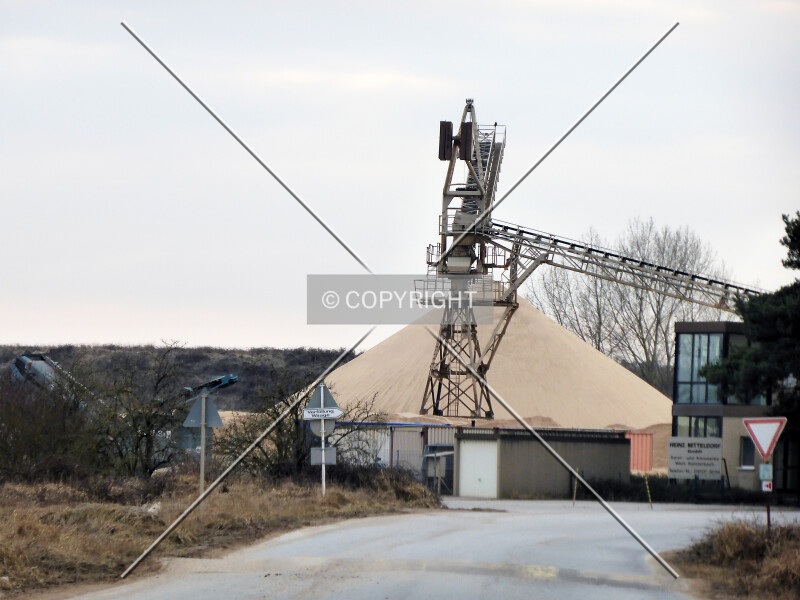
sand quarry Photos
Related definitions
-
chalk quarry
A site extracting chalk, a soft white calcite material, from an open pit or an underground mine. -
cinder quarry
A site extracting naturally occurring volcanic cinders in bulk for uses such as surfacing, mulch, or material mixtures. -
clay quarry
A site deliberately extracting fine-grained clay deposits for further use, excluding incidental excavation. -
granite quarry
A site extracting naturally occurring granite from the earth on a large scale, usually as blocks or slabs. -
gravel quarry
A site extracting gravel from the ground in bulk, generally with particles 2 to 64 millimeters across. -
gypsum quarry
A site extracting naturally occurring gypsum, calcium sulfate dihydrate, from the earth in bulk. -
limestone quarry
A site where sedimentary calcium rock is extracted from the earth in large blocks or sheets. -
marble quarry
A site where metamorphic carbonate rock is extracted from the earth in large blocks or sheets. -
sandstone quarry
A site where sedimentary rock of compacted sand is extracted from the earth in large blocks. -
slate quarry
A site where rock from metamorphized clay is extracted from the earth in large blocks or sheets.