
serpentinite
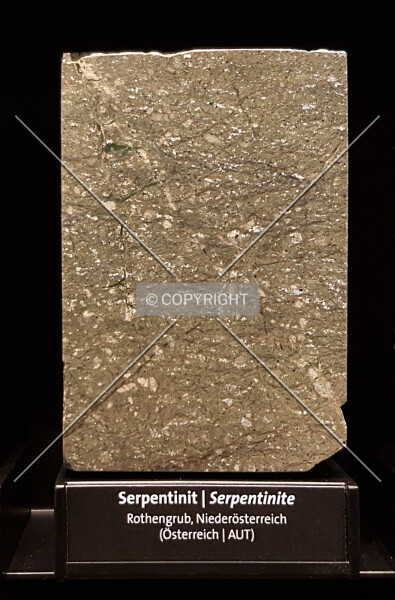
A green metamorphic facade stone composed mainly of serpentine minerals, often selected for its color and pattern.
Serpentinite is a dark green metamorphic rock, often formed in the oceanic crust or other deep geologic sources. It consists mainly of serpentine-group minerals formed through hydration of magnesium- and iron-bearing silicate minerals. Other constituents can include nickel, chromium, manganese, or cobalt.
The rock is named for serpents because of its green and often scaly appearance, although smoother and less scaly stones are much more commonly used in architecture. The rock gives buildings a distinctive appearance, and is favored for its aesthetic qualities.
The green color and surface pattern describe the natural stone. A smooth architectural finish does not exclude it merely because the surface lacks the scaly appearance that gave the rock its name.
serpentinite Photos
Related definitions
-
alabaster
A translucent gypsum or calcite stone, usually decorative indoors but occasionally used as a facade material. -
basalt
A dark, generally fine-grained igneous facade stone formed when lava cools and solidifies at the surface. -
gabbro
A dark, visibly grained intrusive igneous facade stone formed underground, here also including finer-grained diabase. -
granite
A hard, visibly grained igneous facade stone formed from magma cooling underground, used rough or polished. -
limestone
A sedimentary stone composed mainly of calcium carbonate, commonly used in natural stone building facades. -
marble
A brittle rock formed from calcite crystal and prized for its mottled patterns. -
quartz
A hard crystalline mineral occurring in many colors, normally clear or whitish when used on building facades. -
quartzite
A hard natural facade stone formed by the metamorphism and recrystallization of sandstone under heat and pressure. -
sandstone
A natural sedimentary facade stone made of cemented sand grains, commonly quartz, with varied colors and textures. -
slate
A metamorphic stone that splits into sheets, used as facade sheets or shingles outside roof surfaces. -
soapstone
A soft, talc-rich metamorphic rock with a slippery feel, used as a natural stone material on building facades. -
suevite
A composite rock formed in a meteor impact containing glass and fragments of rocks. -
travertine
A calcium-carbonate stone deposited from water, used as decorative natural stone and sometimes called travertine marble. -
tuff
A relatively soft volcanic rock made from consolidated erupted material, used as a textured natural facade stone.