
caisson foundation
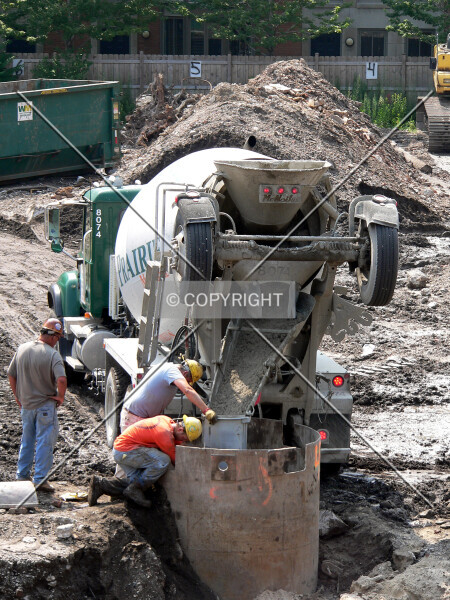
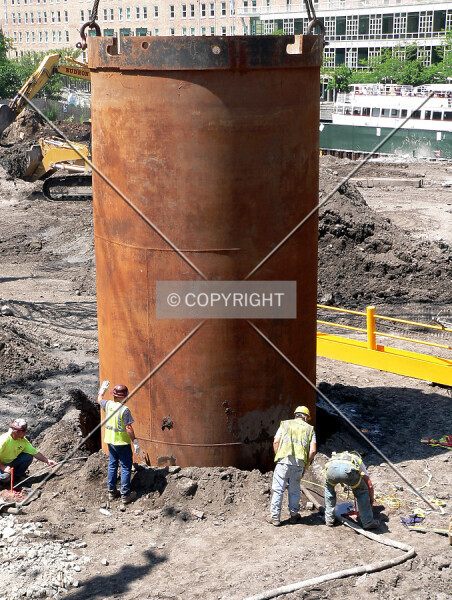
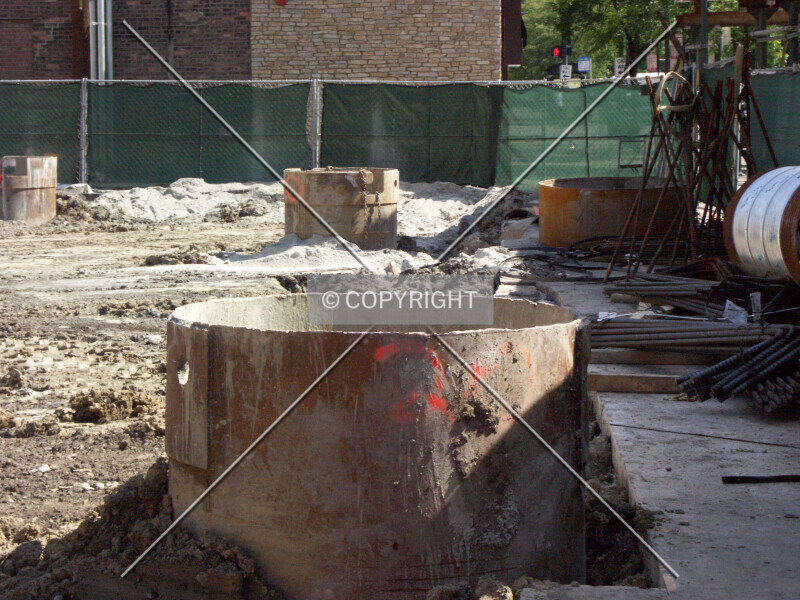
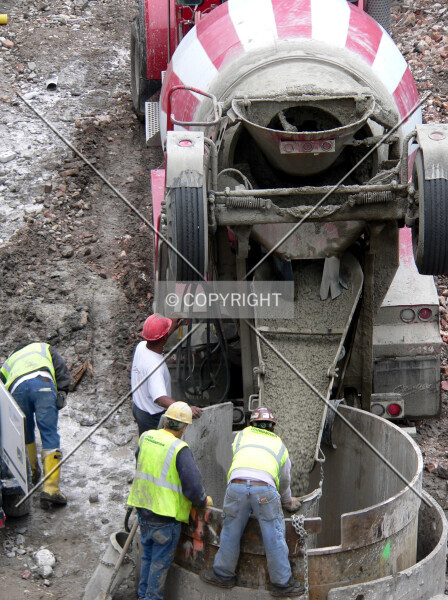
A foundation consisting of reinforced concrete piers which are poured into drilled holes in the ground.
Caisson foundations are poured into the ground, unlike piles which are generally manufactured off-site and pounded into the earth. (In many countries caissons are referred to as piles, and they are sometimes also called piers.)
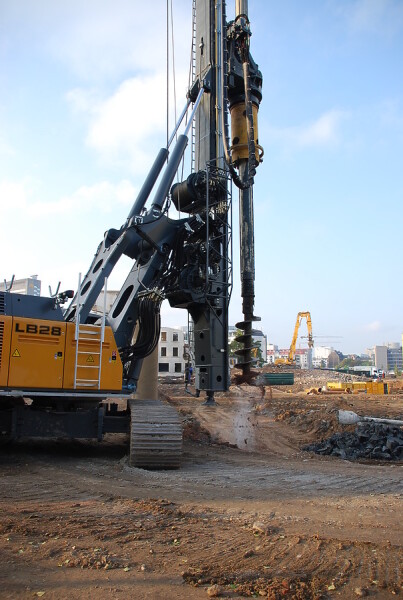
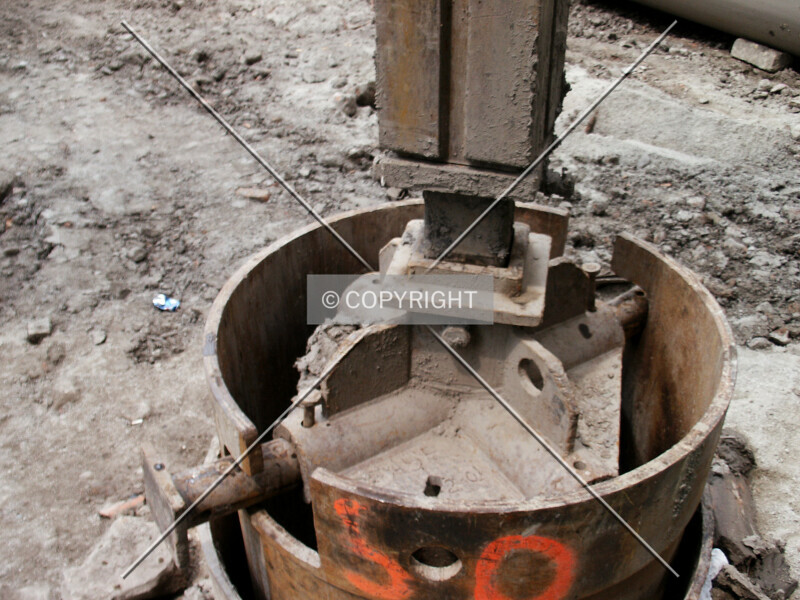
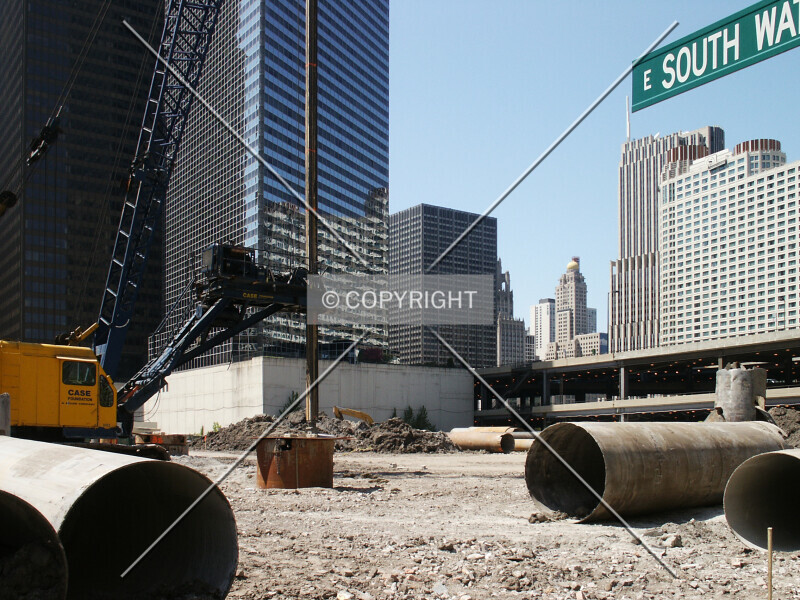
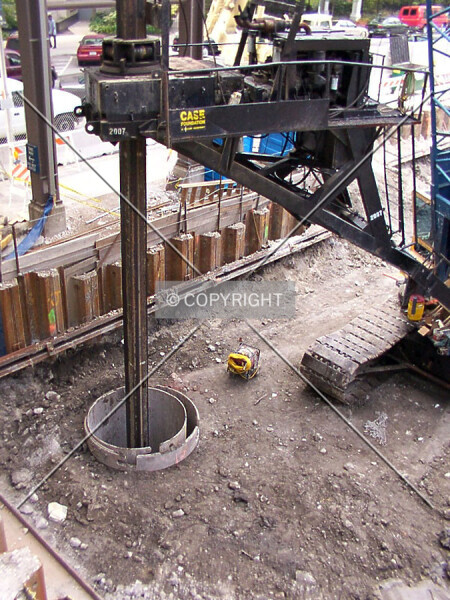
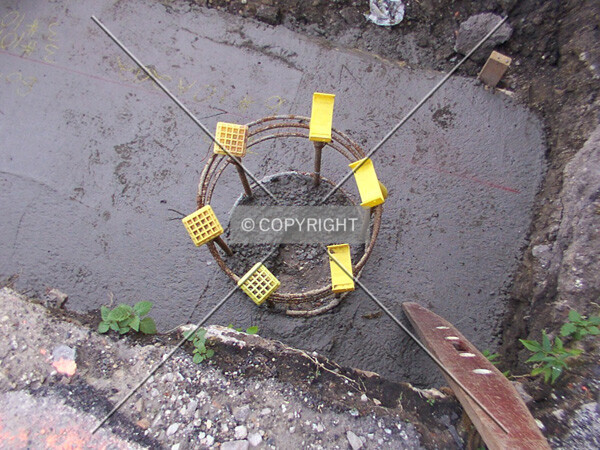
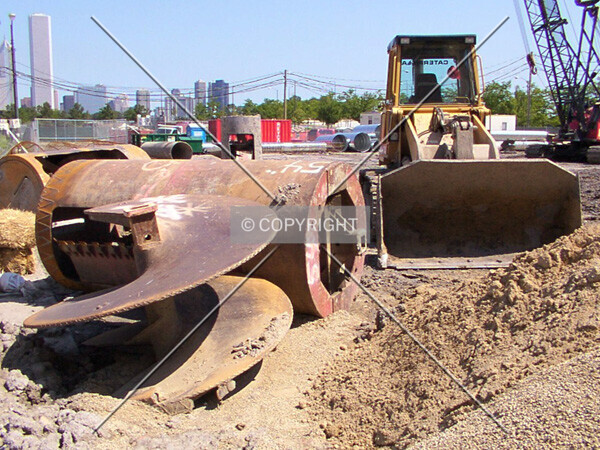
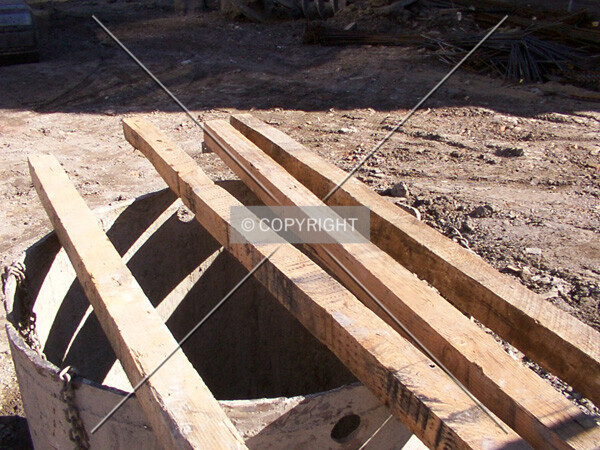
A caisson is created by augering a deep hole into the ground, and then filling it with concrete. Steel reinforcement is often inserted for at least part of the caisson's length. Caissons are drilled either to bedrock (called rock caissons) or deep into the underlying soil strata if a geotechnical engineer finds the soil suitable to carry the building load. When caissons rest on soil, they generally have a belled shape at the bottom to spread the load over a wider area. Special drilling bits are used to remove the soil for these belled caissons.
Drilling and casting in place distinguish these supports from impact-driven piles in this terminology. The name pile may still be used for them in local engineering practice.
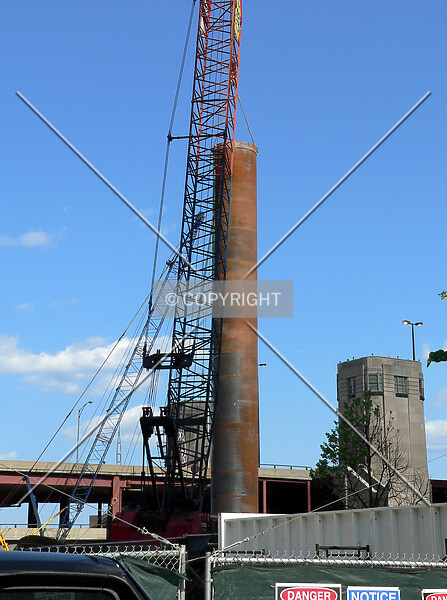
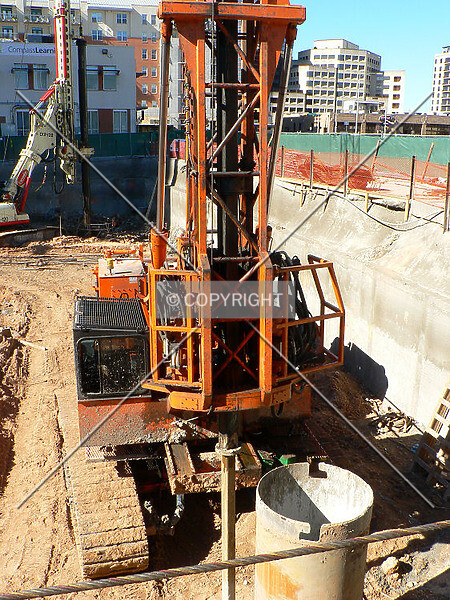
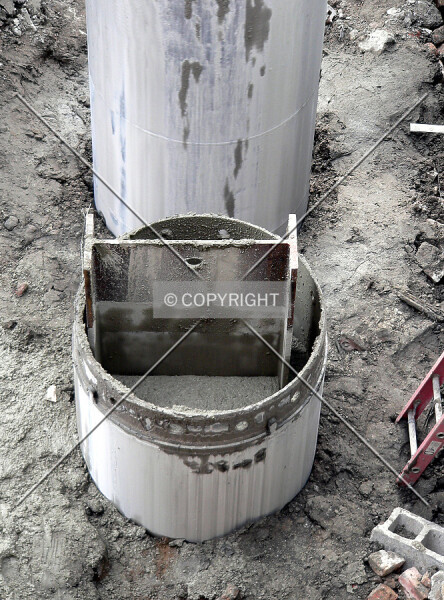
caisson foundation Photos
Related definitions
-
floating
An object freely supported by water or another liquid or semi-liquid substance, without a fixed foundation. -
load-bearing wall foundation
A foundation in which the slurry wall or a vertical slab provides major load-bearing structural support. -
mat foundation
A foundation supporting essentially an entire building on a large continuous footing, sometimes combined with piles or caissons. -
mooring
A support arrangement tying a water-supported floating structure to a fixed point, temporarily or permanently. -
no foundation
An object designed to rest directly on the ground through its own cohesive construction, without a built foundation. -
pile foundation
A foundation consisting of vertical supports which are hammered into the ground. -
spread foundation
A foundation distributing structural loads through one or more broad horizontal footings, mats, or pads.