
definition
strict definition
continuous glazing
Fixed windows arranged side by side in long rows or on a continuous surface.
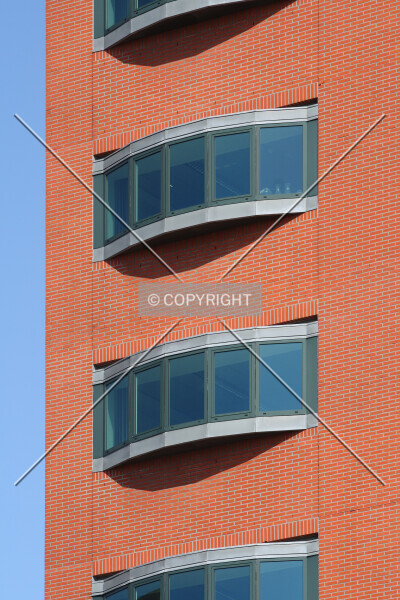
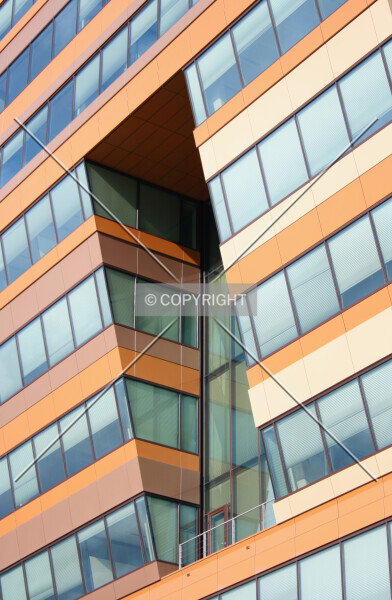
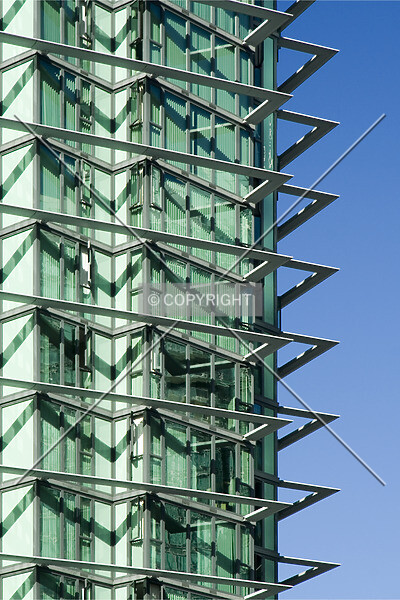
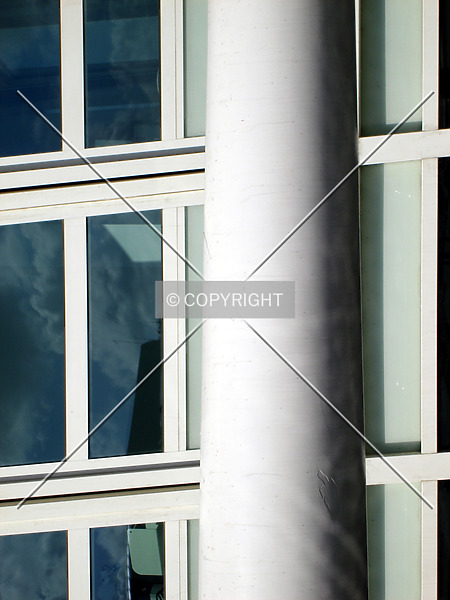
Continuous glazing consists of several fixed window panes arrayed one after the other in long rows (or sometimes filling a continuous plane). The individual panes may be separated only by framing elements, caulking, or other thin buffers.
If the window panes are separated by wall elements into groups of 3 or fewer panes side by side, they should be classified as picture windows.
Most buildings with all-glass facades also have continuous glazing.
continuous glazing Photos

Related definitions
-
awning
An openable window hinged at the top of its frame, with the pane swinging about that upper edge. -
casement
A window that swings from a side hinge, including diagonal sides closer to vertical than horizontal. -
glass brick
A window opening filled with glass masonry units mortared together, usually admitting light while obscuring clear views. -
hopper
An openable window hinged along its bottom edge, allowing the rest of the pane to swing about that edge. -
louvered
A window which is divided into multiple panes which swing open on parallel hinges. -
multi-lit
A window divided into a grid or another arrangement of smaller panes, most of which cannot be opened. -
no windows
A structure without facade windows for light or views, while allowing glass doorways, skylights, and other non-window openings. -
picture
A fixed window filling its wall opening or sharing it with a few other panes, excluding long rows and many small divisions. -
sash
A window that opens by sliding vertically, usually with two panes that overlap when opened. -
sliding
A window that opens by moving sideways along a groove or track, including tracks with a curved starting section. -
stained-glass
A window containing colored glass, often in small panels, excluding clear or uniformly very lightly tinted multi-lit glazing. -
tilt
An openable window hinged in the middle, rotating about either a horizontal or a vertical central axis. -
tilt-turn
An openable window combining opening types so the user can choose between multiple axes of movement. -
unglazed window openings
Permanently open window apertures admitting light and views through a facade, with screens or no barrier.