
paternoster
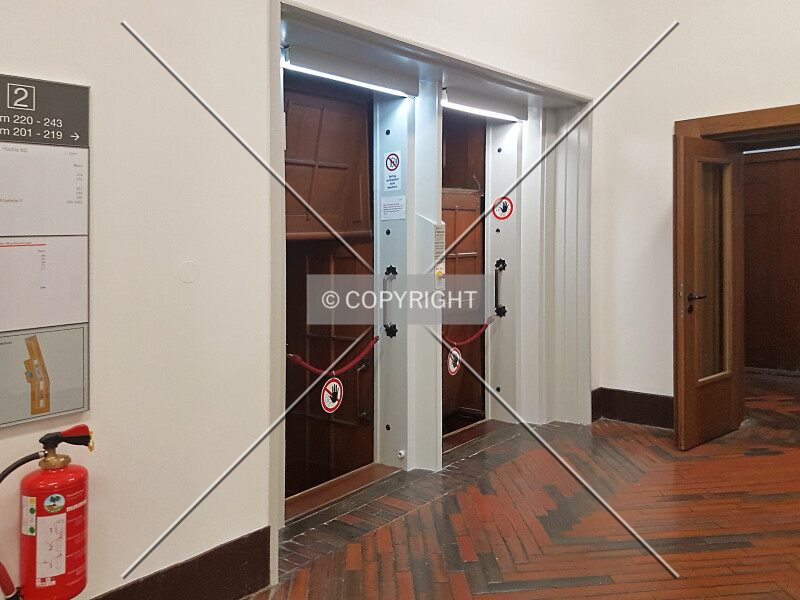
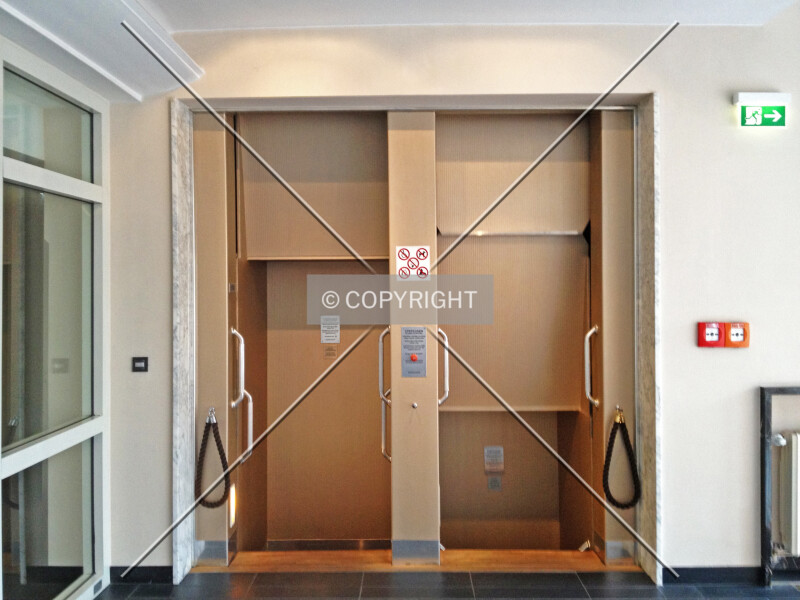
Doorless vertical lift cabins carried upright around a continuously moving loop with upward and downward shafts.
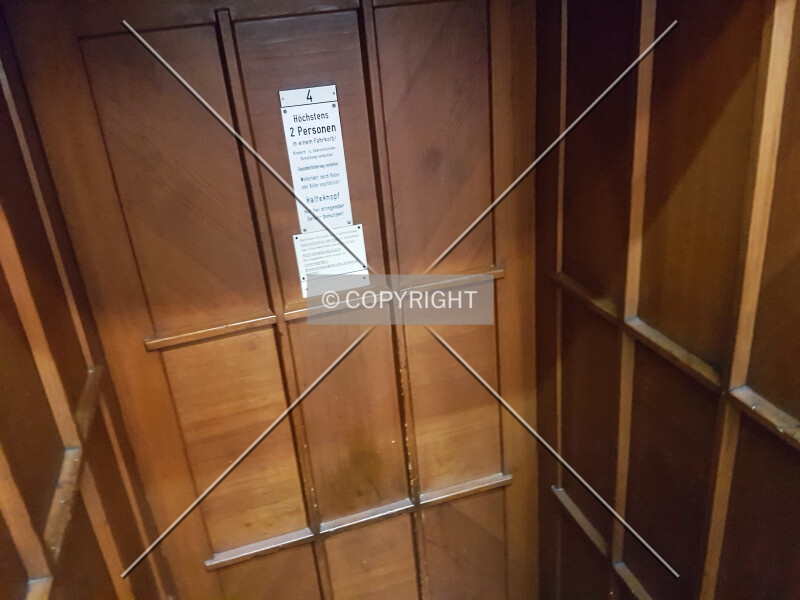
Paternosters are vertical transportation lifts similar in function to elevators, where the cabs are mounted onto a continuously moving loop. This reduces wait times to a minimum; a cab will arrive at a given floor every few seconds. The cabins in a paternoster do not have doors, and are always open while the device itself is open for use.
A paternoster normally occupies 2 separate shafts, one moving continuously upward and the other continuously downward. For the sake of passenger safety, cabs do not flip over at the bottom and top ends; rather they are carried straight across, so that it is possible to ride the full loop.
Although cabin capacity in a paternoster is usually smaller than that of a regular elevator, these lifts are generally able to carry more people and waste less space because several cabins occupy a shaft at the same time, instead of only one.
Disadvantages include slow speed necessitated by passengers' need to get on and off safely. In spite of this precaution however, accidents sometimes occur as people hesitate to get on or off and attempt to cross the threshold too early or late. A paternoster is generally not considered to be handicapped accessible as it is very difficult and dangerous to use by persons in wheelchairs or with difficulty walking.
paternoster Photos
Related definitions
-
hydraulic
Elevators raised by a fluid-powered cylinder-and-piston mechanism and lowered by controlled release of fluid. -
platform lift
A platform raised and lowered mechanically to transport persons and cargo between different levels. -
rack and pinion
Elevators that climb along a toothed rack through the rotation of pinion gears engaged to the rack. -
scissor lift
Elevators raised and lowered from underneath by an extendable lattice of criss-crossed folding beams. -
traction
Elevators raised and lowered along tracks by cables, using a counterweight for balance.