
number of inclined autowalks
The number of diagonally inclined mechanized moving walkways in a structure or area.
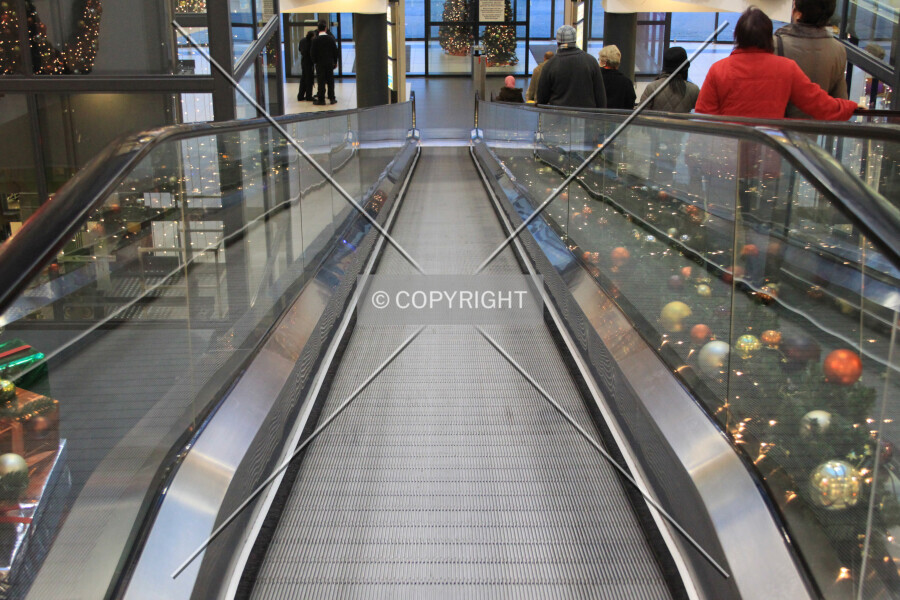
The number of inclined autowalks (or moving ramps) in a structure or area is the total of all mechanized belts or pathways in that same structure or area which carry persons along a continuous walkable surface, and which rise or descend a noticeable vertical distance. They are most commonly used in airports, transit centers, and large shopping or multi-use centers.
A continuous walkable surface and a noticeable change of elevation establish an inclined autowalk. A flat moving walkway belongs to the horizontal-autowalk count instead.
The surface carries people up or down without forming a moving staircase. Its location in an airport, transit center, or shopping complex is common rather than required.
number of inclined autowalks Photos
Related definitions
-
number of BMUs
The number of building maintenance units installed for cleaning and repair of building surfaces. -
number of cart escalators
The total number of automatic inclined transports for shopping carts within a structure. -
number of dumbwaiters
The total number of cargo lifts in a structure which are too small for persons to ride in. -
number of elevator groups
The number of groups of elevators in a structure, in which each elevator in the group shares the same control system. -
number of elevators
The total number of passenger, freight, and vehicle elevators within a structure. -
number of escalators
The number of individually driven moving staircases inside a structure, excluding shopping cart escalators. -
number of freight elevators
The number of elevators used for heavy-duty moving or transportation of goods within a building. -
number of freight hoists
The number of movable platforms for lifting cargo, especially near loading docks. -
number of horizontal autowalks
The total number of mechanized moving walkways with no vertical rise in a structure or area. -
number of observation gondolas
The quantity of moving cabs in or on a structure other than normal elevators which provide observation rides. -
number of passenger elevators
The number of elevators normally available for passenger traffic, excluding the separately defined freight and vehicle elevators. -
number of paternosters
The number of continuously moving paternoster loops installed at least partly within a structure. -
number of vehicle elevators
The total quantity of elevators in a structure or module built for cars or large motorized vehicles.